

Endpoint security training is the fastest practical route from general IT work into a SOC analyst or endpoint administrator role, because it builds the specific skills hiring managers screen for: reading EDR telemetry, hardening devices against real attack techniques, and applying Zero Trust posture checks. You will not walk out job-guaranteed, but you will walk out able to configure a security baseline, triage an alert, and explain why it mattered. That combination, more than any certificate on its own, is what separates candidates who get interviews from candidates who get filtered out.
TL;DR:
- Courses should emphasize configuring telemetry pipelines, interpreting real alert data, and building defendable device baselines rather than just theoretical knowledge.
- Labs must involve scenario-based exercises such as attack detection, telemetry triage, and incident investigation, producing artifacts like investigation reports or triage runbooks.
- Evaluate courses based on lab depth, measurable outcomes, instructor experience, assessment type, and access duration, aiming for at least 12 months of practical, scenario-based training.
- Focus on mastering continuous Zero Trust verification, threat surface reduction, and cloud-based endpoint management, avoiding outdated or static training materials.
- Prioritize artifact creation and hands-on skills linked to real SOC workflows over certificates alone, ensuring the ability to demonstrate practical work during interviews.
Table of Contents
- Who Endpoint Security Training Is Actually For
- What a Solid Curriculum Actually Covers
- The Labs and Tools That Separate Real Training From Theory
- How To Choose The Right Course Without Wasting Months
- Career Outcomes And What Comes Next
- Why Blue Team Academy’s Approach Matches What Employers Actually Screen For
- Measuring Whether The Training Actually Stuck
- The Real Obstacles Learners Hit, And What Actually Fixes Them
- Where Endpoint Security Is Headed, And What Training Should Already Include
- Editorial Take: Stop Optimizing For Certificates, Start Optimizing For Artifacts
- Ready To Build The Lab Portfolio Employers Actually Ask For
- Sources
Who Endpoint Security Training Is Actually For
You do not need a computer science degree to start, but you do need some mileage under you. Most programs assume you can already manage a Windows or Linux environment, understand basic TCP/IP concepts, and have looked at a system log without panicking. If you are still fuzzy on subnetting or have never touched a command line, a general IT fundamentals course should come first.
Course levels typically break down like this:
- Beginner tracks assume baseline system administration and basic networking, then introduce endpoint concepts from scratch.
- Intermediate tracks assume you already know what an endpoint agent does and push straight into EDR telemetry, attack surface reduction, and incident triage.
- Role-fit matters here: this training prepares you for tier-1 SOC analyst, endpoint administrator, and junior threat-hunting roles, not penetration testing or security architecture positions.
If you already run infrastructure day to day, you are past the entry point. Go straight for a course that treats you like a practitioner, not a beginner.
What a Solid Curriculum Actually Covers
A lot of “endpoint security training” out there is glorified awareness content dressed up for a professional audience. That’s a different product with a different purpose. Cybersecurity awareness training teaches employees not to click phishing links; endpoint protection courses teach you to configure, monitor, and defend the machines those employees use. If a course cannot tell you which of the two it is, that’s a warning sign on its own.
The modules that show up consistently across serious training paths, including Microsoft’s own Intune-based endpoint security learning path, look like this:
- Common endpoint threats and attack techniques (malware, living-off-the-land, credential theft)
- Endpoint hardening and security baseline configuration
- EDR fundamentals: how detection, response, and isolation actually work
- Telemetry collection and log analysis
- Zero Trust device posture and compliance enforcement
- Device encryption and data protection controls
- Attack surface reduction rules
- Incident triage and escalation workflow
The learning objectives matter more than the module titles. A course worth your time will have you configuring telemetry pipelines, not just reading about them, interpreting real alert data instead of sample screenshots, and building device baselines you can defend in an interview. Microsoft’s module on hardening endpoints with Defender for Endpoint is a good benchmark here: it pairs onboarding and baseline configuration with attack surface reduction rules in the same hands-on exercise, which mirrors how the work actually gets assigned on a SOC team.
Zero Trust deserves special attention because it trips up a lot of learners. Microsoft frames Zero Trust as continuous verification of identity and device posture, not a policy you set once and forget. Training that treats Zero Trust as a single configuration step is teaching you the wrong mental model. You want a course that has you managing conditional access scenarios, the kind covered in depth by Cloud9’s breakdown of conditional access as a Zero Trust engine, because that ongoing enforcement is the actual job.
The Labs and Tools That Separate Real Training From Theory
Here’s the honest test for any endpoint course: can you point to a specific artifact you produced, or did you just watch someone else do it? Employers do not hire based on which modules you completed. They hire based on whether you can sit down at a console and do the work.
Look for labs built around three scenario types:
- Simulated attacks where you have to detect and respond, not just read about the technique afterward.
- Telemetry triage using real or realistic log data pulled from endpoint sensors.
- Incident investigation where you reconstruct what happened from artifacts, not from a narrative someone wrote for you.
The tools matter too, because interviewers ask about them by name. Coursera’s Mastering Endpoint Security & Threat Defense course builds its labs around Sysmon logging, EDR telemetry, and MITRE ATT&CK mapping. You want comparable exposure to Sysmon, Process Monitor, osquery, and Velociraptor, plus time inside a generic EDR console so the interface itself isn’t a mystery on day one.
Pro Tip: Judge a course by its deliverables, not its video count. A strong lab produces something you can show: a written incident investigation, a triage runbook, or an annotated alert timeline. If a program’s “hands-on lab” is a checklist with no output, it’s a demo, not practice. For a deeper look at what real lab structure should include, see this guide to hands-on cybersecurity labs.
How To Choose The Right Course Without Wasting Months
Pick the wrong course and you will finish it knowing less than you think. Use these criteria before you pay for anything:
- Lab depth. How many hours are hands-on versus video lecture, and do the labs use real telemetry artifacts?
- Measurable outcomes. Can the course describe, in specific terms, what you will be able to do when you finish, not just what you will “understand”?
- Instructor expertise. Was the curriculum built by people who have actually worked SOC or endpoint admin roles, or by generalist course creators?
- Assessment format. Are you graded on a quiz, or on a practical scenario that mirrors real triage work?
- Access length and cost. Twelve months of access is a reasonable industry standard; anything under 90 days for a self-paced program is thin.
Ask directly: what does the lab environment run on, what artifacts will I produce, and how am I assessed at the end? A vague answer to any of those questions is a red flag. So is a course that promises outcomes without labs, or labs without any assessment tying them together. Government-backed resources like CISA’s cybersecurity training catalog are useful for benchmarking what scenario-based, exercise-driven training actually looks like when it’s done well.
Career Outcomes And What Comes Next
Most graduates land in tier-1 SOC analyst roles or junior endpoint administrator positions, then progress toward tier-2 analyst, threat hunter, or endpoint security engineer as they build hours on the job. That progression is realistic, not guaranteed, and it depends heavily on the artifacts you can show, not just the course you finished.
Certifications pair well with this training rather than replace it. Vendor-specific credentials tied to the EDR platform you trained on, along with broader SOC-analyst certifications like CompTIA’s Cybersecurity Analyst (CySA+) or GIAC’s Certified Endpoint Protection credentials, round out a resume that already has practical lab work behind it.
Before you apply anywhere:
- Build a portfolio lab environment you can walk an interviewer through.
- Practice alert triage until you can explain your reasoning out loud, not just reach the right answer.
- Write two or three example incident reports formatted the way a real SOC would expect them.
For a fuller look at how this transition typically plays out, Blue Team Academy’s guide to moving from IT to cybersecurity walks through the realistic sequencing.
Why Blue Team Academy’s Approach Matches What Employers Actually Screen For
Everything above, the lab depth, the measurable outcomes, the real telemetry work, is the checklist Blue Team Academy built its curriculum around, not an afterthought bolted onto video lectures. The Threat & Control Method gives you a repeatable decision framework for evaluating and responding to endpoint threats, so you’re not memorizing scenarios but learning a process that transfers to whatever your first SOC actually throws at you.
The course design reflects that checklist directly:
- Peer-reviewed content built by people with real defensive security backgrounds, not generalist instructional designers
- Generative-AI enhancements used to sharpen scenario variety and explanation quality, not to replace hands-on lab time
- Recorded classes plus downloadable templates you can reuse on the job, including incident report formats and triage runbooks
- 12 months of access, well above the thin 60 to 90-day windows common elsewhere
- A student community and support channels for when a lab artifact doesn’t match what you expected
[VERIFY: author Konnio credentials, specific case studies, and internal outcome data to be added once available.]
Measuring Whether The Training Actually Stuck
Finishing modules is not the same as retaining skill. The best test of retention is whether you can perform a triage task cold, weeks after training, without rewatching a video first.
Build in spaced practice rather than a single pass through the material. Revisit a lab scenario 30 days after you first completed it and see how much you can reconstruct from memory. If you’re relying entirely on notes, the knowledge hasn’t transferred yet. Practitioners consistently find that the skills that stick are the ones tied to configuring telemetry and running live alert triage, not the ones absorbed passively through lecture.
Track retention with concrete markers instead of vague confidence:
- Can you explain, without notes, why a specific alert was triggered and what your next step would be?
- Can you configure a security baseline from memory, or do you need a reference guide open the whole time?
- Can you write an incident summary in the format a real SOC lead would expect, under time pressure?
Peer review helps here more than most learners expect. Having someone else critique your triage write-up exposes gaps that self-assessment misses entirely, because you tend to grade your own reasoning more generously than a colleague would. If your course includes any kind of community or cohort review, use it deliberately rather than skipping straight to the next module. Retention is also a scheduling problem: cramming a course in one weekend produces recognition, not recall. Spreading the same material over several weeks, with deliberate returns to earlier labs, produces the kind of durable skill that survives an actual interview whiteboard exercise.
The Real Obstacles Learners Hit, And What Actually Fixes Them
The most common failure point isn’t difficulty, it’s context switching. Endpoint security training assumes comfort with system administration and basic networking, and if either is shaky, every module takes twice as long because you’re learning two things at once. The fix is blunt: shore up the prerequisite gap first with a short refresher, rather than pushing through a course that assumes knowledge you don’t have.
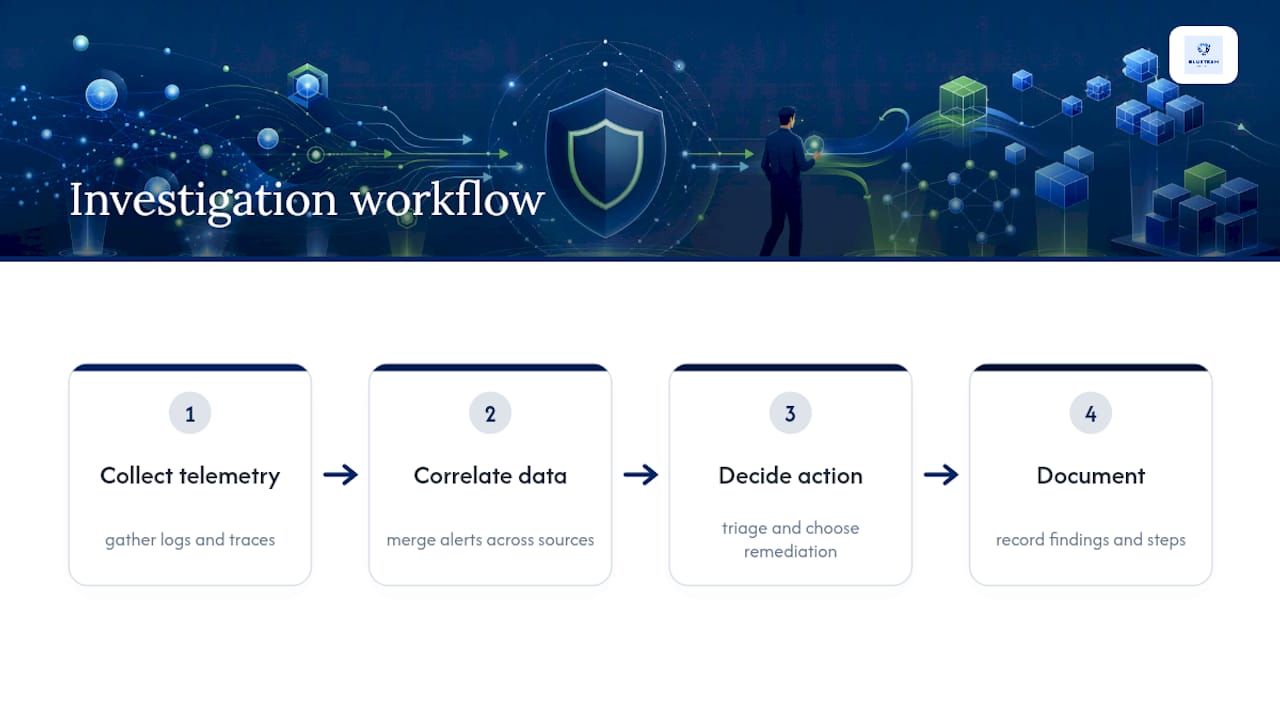
The second obstacle is tool overload. Between Sysmon, osquery, Velociraptor, and a vendor EDR console, it’s easy to feel like you’re learning four separate careers instead of one skill set. The practical fix is to anchor everything to one investigation workflow: collect telemetry, correlate it, decide, document. The specific tool changes; the workflow doesn’t.
Zero Trust concepts trip up a disproportionate number of learners, largely because Zero Trust implementation is more involved than a single policy push: it requires ongoing compliance monitoring, group scoping, and graduated remediation rather than a one-time setup. Learners who expect a checkbox often stall here. Slow down and treat it as a process, not a configuration screen.
Finally, motivation drops off in self-paced formats without external accountability. A student community or cohort structure, even a lightweight one, measurably keeps people moving compared to solo study with no check-ins.
Where Endpoint Security Is Headed, And What Training Should Already Include
Endpoint security training that only covers today’s threat landscape will be stale within a year. A few shifts are already reshaping what “endpoint protection” means in practice, and a current course should reflect them.

Extended detection and response (XDR) is pulling endpoint telemetry into a broader correlation layer alongside identity and network signals, which means training that treats endpoint data as an isolated silo is teaching an outdated workflow. Cloud-managed endpoint policy, the kind covered in Microsoft’s Intune-based hardening modules, is also becoming the default deployment model rather than the exception, so hands-on time with cloud-based baseline management is no longer optional for a modern course.
Identity-centric attacks targeting endpoints, credential theft chained with device compromise, have made conditional access and device posture enforcement a core skill rather than an advanced topic. A course still framing Zero Trust as a bolt-on module rather than a thread running through every lab is behind where the field actually is.
Attack surface reduction rules and behavioral detection are replacing pure signature-based approaches as the primary EDR defense layer, which means training built around static malware samples alone won’t prepare you for what a modern console actually flags. Any course you’re evaluating in 2026 should be explicit about how recently its lab content and telemetry examples were updated. Stale sample data teaches stale instincts.
Editorial Take: Stop Optimizing For Certificates, Start Optimizing For Artifacts
The conventional advice in this space is to collect certifications first and worry about hands-on skill later. That’s backwards, and it’s why so many career changers finish a stack of credentials and still struggle in interviews. Certifications validate that you sat through material. They don’t validate that you can sit down cold and triage an alert someone else generated.
What the evidence actually supports is narrower and more useful: prioritize training built around producing artifacts, an investigation write-up, a triage runbook, a defensible baseline configuration, over training built around passing a quiz. The module design behind Microsoft’s own endpoint hardening path makes this point implicitly by pairing every concept with a graded exercise rather than a reading check.
The overlooked nuance is that Zero Trust and telemetry analysis aren’t separate skills, they’re the same skill applied at different layers. Learners who treat them as distinct modules end up with fragmented understanding. If you take one thing from this article, let it be this: judge every course, every lab, every hour spent, by whether it leaves you holding something concrete you could show a hiring manager. Everything else is study time you’ll forget by the interview.
— Konnio
Ready To Build The Lab Portfolio Employers Actually Ask For
You’ve seen the checklist: lab depth, measurable outcomes, real telemetry tools, and assessments that mirror actual SOC work. Blue Team Academy is built around exactly that checklist, not as marketing language but as course architecture. The Threat & Control Method gives you a repeatable decision process instead of disconnected facts, peer-reviewed content keeps the curriculum grounded in what practitioners actually do, and 12 months of access means you’re not racing a 60-day countdown while holding down your current job.
You get recorded classes, reusable templates for incident reports and triage runbooks, generative-AI-enhanced scenario practice, and a student community for when a lab result doesn’t match what you expected. If you’re ready to move past reading about endpoint defense and start producing the artifacts that get you past a first-round interview, check out the full course catalog at Blue Team Academy and see which track matches where you are right now.
Sources
- Protect devices using Microsoft Intune – Training | Microsoft Learn
- Cybersecurity awareness training | CISA
- Mastering Endpoint Security & Threat Defense | Coursera
